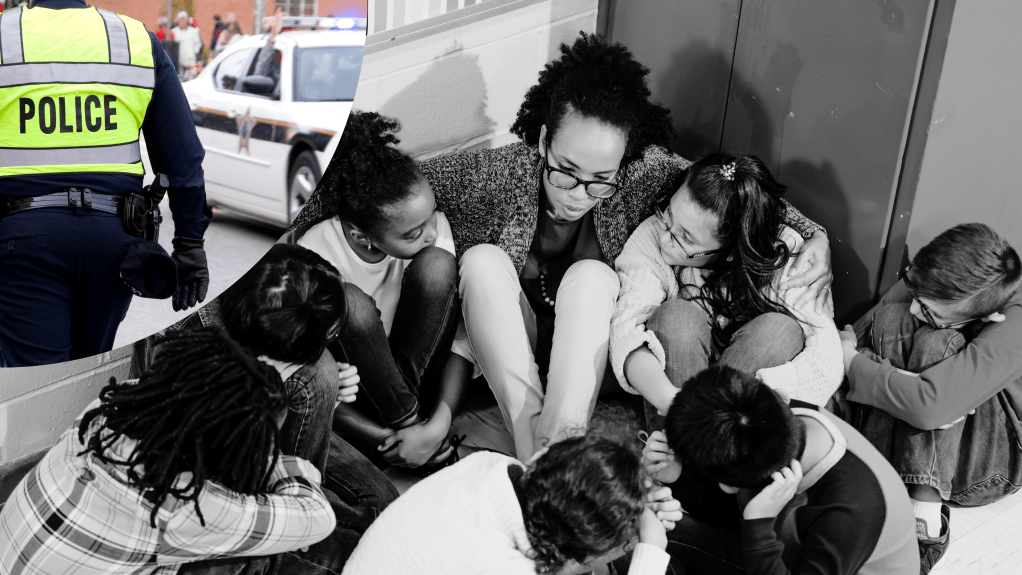
The text read “Guys I might die. We are in lockdown.” An American parents’ worst nightmare.
The text chat included my daughter, husband, and myself. We assured her that it was likely a drill and not to panic. Simply stay calm, quiet, and follow any directions provided. She said she couldn’t hear anything going on outside of the large supply closet she was hiding in with her classmates.
This ends well. There was no active shooter present. The alarm tripped and out of an abundance of caution, local police and the sheriff’s office swept the building to ensure everyone’s safety. Nothing happened. But so much happened.
In recent years, active shooter drills and false alarms have become an unfortunate reality in schools across America. While these measures are implemented to prepare students for potential threats, they can often lead to unintended psychological consequences. I share this personal story to hopefully begin a dialogue about better helping our kids manage these experiences and to help inform gun safety discussions.
The Mental Health Effects and Our Experience
While lockdown drills may be best practice to keep kids safe in emergency situations due to the ongoing gun violence epidemic, the exposure to simulated violence and constant anticipation of potential danger can result in a range of mental health issues among students. These may include anxiety, stress, sleep disturbances, and even post-traumatic stress disorder (PTSD). Even when the threat is not real, like in the case of a false alarm, the fear and panic experienced are very much genuine.
Our false alarm went on for 43 minutes. For 43 minutes my child was barricaded in a storage closet not knowing if there was an active shooter. All she knew was that the local police were there, then the sheriff’s office had arrived. Automated lock down messages were repeating over the loudspeaker.
I doubt there is a single American parent that hasn’t thought about what they would do if a shooting were to occur at their child’s school. Upon receiving my daughter’s text, I wondered “Is this it? Is this actually happening?” At first, I assured myself it must be a drill. But once she started clarifying the situation, I quickly realized it wasn’t a drill. I started searching on local social media pages and checking the police department website for any emergency notices. The school phone was not being picked up. I hopped in my car.
Thankfully I was just 10 minutes away and the officer blocking the school entrance informed me they were on lockdown, but they were okay. There was no imminent threat. I texted my daughter and husband and I was grateful that working so close to home allowed me to get that information as quickly as I had. The lockdown lasted another 10 minutes and was followed up by a shelter in place for another 15. In that time police continued to sweep the building to be sure all was clear. What that means is, kids in dark classrooms are met with cops bursting in with flashlights and rifles to check the room.
All was clear. It was a false alarm. Nothing happened. But so much happened.


Fight or Flight: The Body’s Response
When faced with perceived danger, our bodies instinctively switch into fight-or-flight mode. This survival mechanism triggers a cascade of physical reactions: adrenaline surges, heart rate increases, muscles tense, and senses sharpen. It prepares us to either confront the danger (‘fight’) or escape from it (‘flight’).
While this response can be lifesaving in real emergencies, the repeated activation during drills and false alarms can take a toll on students’ physical health. Over time, it can lead to chronic stress, weakened immune system, and increased risk of health issues like heart disease and depression.
After the False Alarm: To Resume or Not to Resume?
When a false alarm is eventually revealed, there’s a common urge to quickly return to normalcy. However, immediate resumption of regular activities might not always be the best approach.
Resuming normal activities immediately after a false alarm can inadvertently send the message that the fear and anxiety students experienced were unimportant. It can also prevent them from processing their emotions and fully recovering from the traumatic event.
Conversely, halting normal activities for an extended period might amplify students’ fears and create an atmosphere of ongoing threat.
The key lies in striking a balance. Schools should acknowledge the emotional turmoil caused by the false alarm, provide necessary psychological support, and gradually ease students back into their normal routine.
After my daughter’s false alarm, it was back to business as usual. I got back to work within 10 minutes. It took a while for me to re-focus and bring my adrenaline down. And my daughter and her classmates resumed their usual school schedule. She went on to her classes and had 2 quizzes that very afternoon. As if nothing happened. Even though so much happened.
Finding a Better Way Forward
While it’s crucial to prepare students for potential threats, we must also consider the psychological costs associated with active shooter drills and false alarms.
Schools should work closely with mental health professionals to develop trauma-informed approaches to safety drills. These could include age-appropriate drills, clear communication, debriefing sessions, and access to counseling services post-drills or false alarms.
Moreover, schools should invest in preventive measures that address the root causes of violence, such as bullying prevention programs, conflict resolution training, and mental health education.
In conclusion, our approach to school safety needs to evolve. It’s about time we prioritize not just the physical security of our students, but their mental and emotional well-being too.


 <strong><span style="text-decoration: underline">The NJ Wellness Advocate </span></strong>
Leave a comment